
For art enthusiasts, the north-eastern state of Assam in India offers a treasure trove of traditional crafts that blend history, culture, and intricate artistry. Nestled among lush green tea gardens and the mighty Brahmaputra River, Assam’s rich craft heritage is a testament to its skilled artisans who have preserved age-old traditions while evolving with contemporary trends. From exquisite handwoven textiles to masterfully crafted bamboo and bell metal works, let’s explore the artistic wonders of Assam.
1. The Magic of Assamese Weaving: Mekhela Chador and Beyond
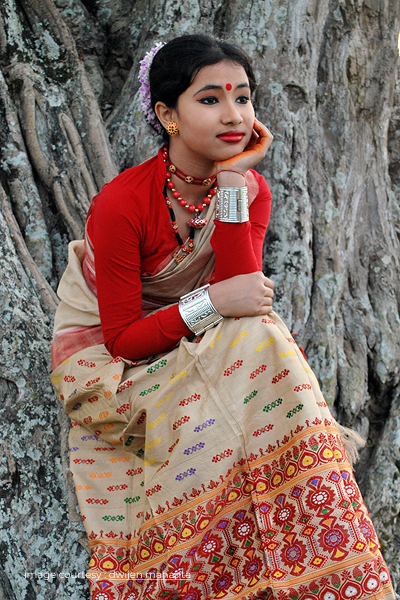
One of Assam’s most celebrated crafts is its handloom weaving, particularly the elegant Mekhela Chador, the traditional attire worn by Assamese women. The state is famous for its three indigenous silks – Muga, Eri, and Pat – each known for its unique texture and durability.
- Muga silk, often referred to as the ‘golden silk of Assam,’ is exclusive to the region and is highly valued for its natural golden sheen and strength.
- Eri silk, also known as ‘Ahimsa silk’ because of its non-violent production process, is warm and often used for shawls and winter wear.
- Pat silk is smooth, glossy, and white in color, often used to create intricate motifs inspired by Assamese folklore and nature.
According to the Handloom Census of India, Assam has over 1.3 million handloom weavers, making it a major hub for traditional textile production in the country. The weaving culture of Assam, particularly in regions like Sualkuchi (often called the ‘Manchester of the East’), has been passed down for generations, with women playing a central role in preserving this craft.
2. Bamboo and Cane Craft: The Green Gold of Assam
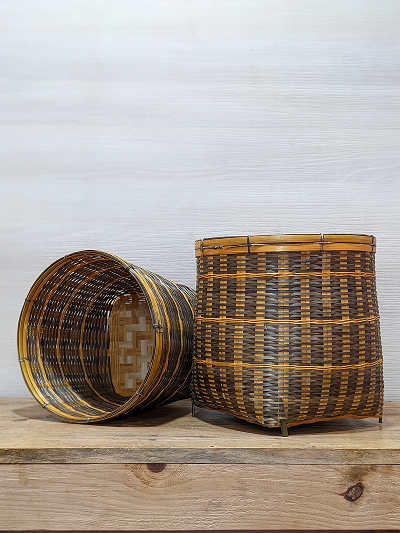
Assam’s abundant bamboo forests have given rise to a thriving bamboo and cane craft industry. Skilled artisans create a variety of products, from household items and furniture to decorative showpieces and musical instruments. The traditional Jaapi—a beautifully decorated bamboo hat with intricate designs—is an iconic symbol of Assamese culture.
Not only is bamboo craft eco-friendly, but it also supports thousands of artisans in rural Assam. According to India’s Ministry of Textiles, bamboo-based industries in Assam employ over 3 lakh (300,000) people, highlighting its economic and cultural significance.
Artisans across Assam use cane to craft furniture, lamps, trays, baskets and other household items. The making of bamboo products is mainly a rural industry. It is commonly pursued by the agriculturists in their spare time as a subsidiary occupation. Its heavy concentration in the rural areas may primarily be attributed to the availability of bamboos in the villages and the very high demand for various bamboo products, such as, mats, baskets, fishing contraptions, etc., in every rural household. The essential equipment’s required for the industry are dao and knife which are invariably found in every family.
3. Bell Metal Craft: The Sound of Tradition
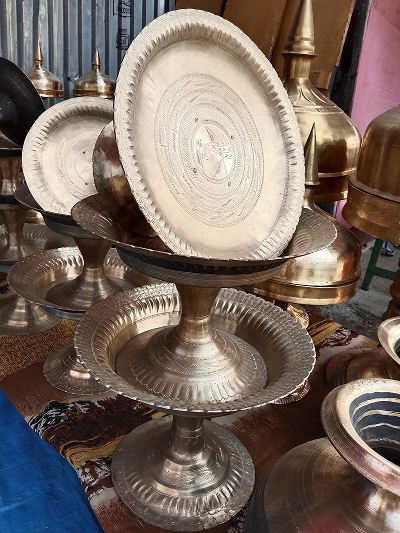
Bell metal is another prized craft of Assam, particularly in Sarthebari, a small town known as the ‘Bell Metal Capital’ of the state. Artisans skillfully mold an alloy of copper and tin to create traditional utensils, decorative items, and the famous Xorai, a ceremonial offering tray used in religious and cultural events.
Bell metal products are not just functional but also hold deep cultural significance in Assamese households and temples. The craft dates back centuries and continues to be a source of livelihood for many families.
Sathebari is known for bell metal craft. The craftsmen are known as Kahar or Orja in this region. They follow ingenious processes to shape the raw material. They make (Kahi Bati) utensils and other items like Ban Bati, Kahor Thal, Frames, Kahor Soriya etc.
4. Terracotta and Pottery: Sculpting History
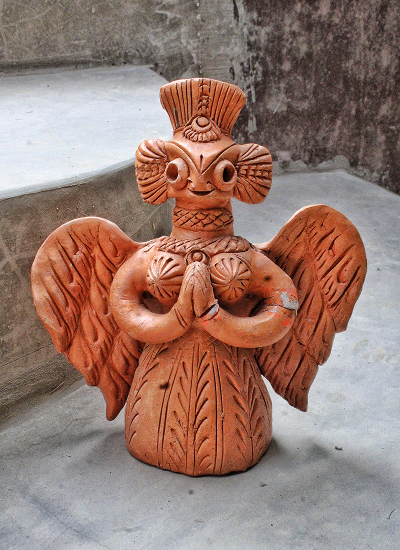
The art of terracotta pottery in Assam has a long history, with communities like the Kumar and Hira potters keeping this tradition alive. Unlike other regions where potter’s wheels are commonly used, the Hira potters of Assam hand-mold their pottery, a technique that has remained unchanged for generations.
Clay idols, decorative pots, and earthenware for daily use are some of the most common terracotta products found in Assam. The craft is particularly prominent in districts like Goalpara and Barpeta, where potters create beautifully designed items reflecting local folklore and mythology.
Majuli, the world’s largest river island and the cultural heart of Assam, is home to a rare and ancient pottery tradition that has fascinated art enthusiasts for centuries. Unlike most pottery-making methods that rely on a potter’s wheel, the artisans of Majuli hand-mold their clay creations using techniques believed to be over 5000 years old, dating back to the Indus Valley Civilization. The clay, sourced from the banks of the Brahmaputra River, is meticulously kneaded, shaped, and sun-dried before being fired in open-air kilns, giving the pottery a distinct earthy texture and durability. Traditionally, Majuli’s pottery is used for making cooking vessels, water pots, and religious items, often characterized by simple, organic shapes and minimalistic designs. This craft, deeply embedded in the island’s Vaishnavite monastic culture, remains a symbol of sustainable artistry, as the artisans rely entirely on natural materials and handcrafting techniques.
5. A Legacy Carved in Wood: The History of Assamese Woodcraft
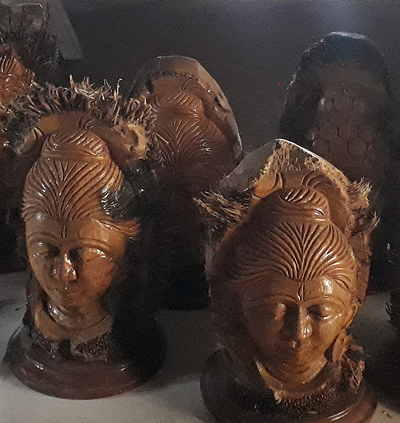
Woodcraft in Assam dates back centuries, with evidence of intricate wooden carvings found in ancient temples, monasteries, and royal palaces. The craft has been an integral part of Assamese culture, especially in religious and traditional performances.
One of the most famous historical examples is the wooden carvings of the Ahom dynasty (1228–1826), which adorned temples and palaces with elaborate floral, animal, and mythological designs. Even today, the Talatal Ghar and Kareng Ghar, remnants of the Ahom era, stand as testaments to the exceptional craftsmanship of Assamese artisans.
A special class of people who excelled in wood carving came to be known as Khanikar, a surname proudly passed down from generation to generation. The various articles in a satra and naam-ghar(place of worship) are stiff cut on wood, depicting the guru asana (pedestal of the lords), apart from various kinds of birds and animals figuring in mythology.
Modern-day Khanikar have taken to producing articles of commercial values, including figures of one-horned rhino and replicas of the world-famous Kamakhya temple – two items heading the list of demands of a visitor from outside.
6. The Jewellery Craft – A Mesmerizing Blend of Tradition
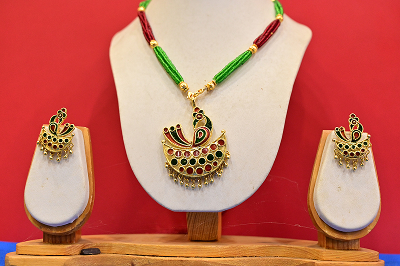
Assam’s jewellery craft is a mesmerizing blend of tradition, culture, and intricate artistry that has captivated art enthusiasts for centuries. Renowned for its exquisite handmade designs, Assamese jewelry is deeply rooted in the state’s heritage, with motifs inspired by nature, mythology, and local folklore. Crafted primarily from gold and silver, traditional Assamese ornaments like Jonbiri, Loka Paro, Dholbiri, Dugdugi, and Gamkharu, Thuria, Dighal Keru are characterized by their delicate filigree work, vibrant enamel detailing, and use of gemstones.
These pieces are often designed to reflect the lush landscapes of Assam, incorporating floral, bird, and river-inspired patterns. The city of Nagaon and Jorhat are particularly known for their skilled artisans who have preserved this age-old craft through generations. Historically adorned by Ahom royalty and Assamese women during cultural festivals like Bihu, this jewellery remains an essential part of the state’s identity.
Today, while Assamese jewellery retains its traditional essence, modern artisans are innovating with contemporary styles, making it appealing to a broader audience. Whether as a statement piece or a treasured heirloom, Assamese jewellery is a true testament to the artistic brilliance and craftsmanship of the region.
The crafts of Assam are more than just artistic expressions; they are a bridge between the past and the present, telling the stories of generations through intricate weaves, skilled carvings, and masterful metalwork. For art enthusiasts, exploring Assam’s crafts is a journey into a world of heritage, sustainability, and artistic excellence. Whether it’s a handwoven Mekhela Chador, a handcrafted bamboo artifact, or a bell metal Xorai, each piece carries the soul of Assam’s artisans—making them timeless works of art.
So, if you’re passionate about traditional crafts, Assam’s artistry is an invitation to discover, appreciate, and celebrate a rich cultural legacy that continues to thrive in the modern world.
 thepeepaltree.in
Leave a comment