
In the previous article, you read about the origin of ceramics art, how it transformed humankind’s evolution; and how practicing pottery turned early humans from hunter-gathering to farming.
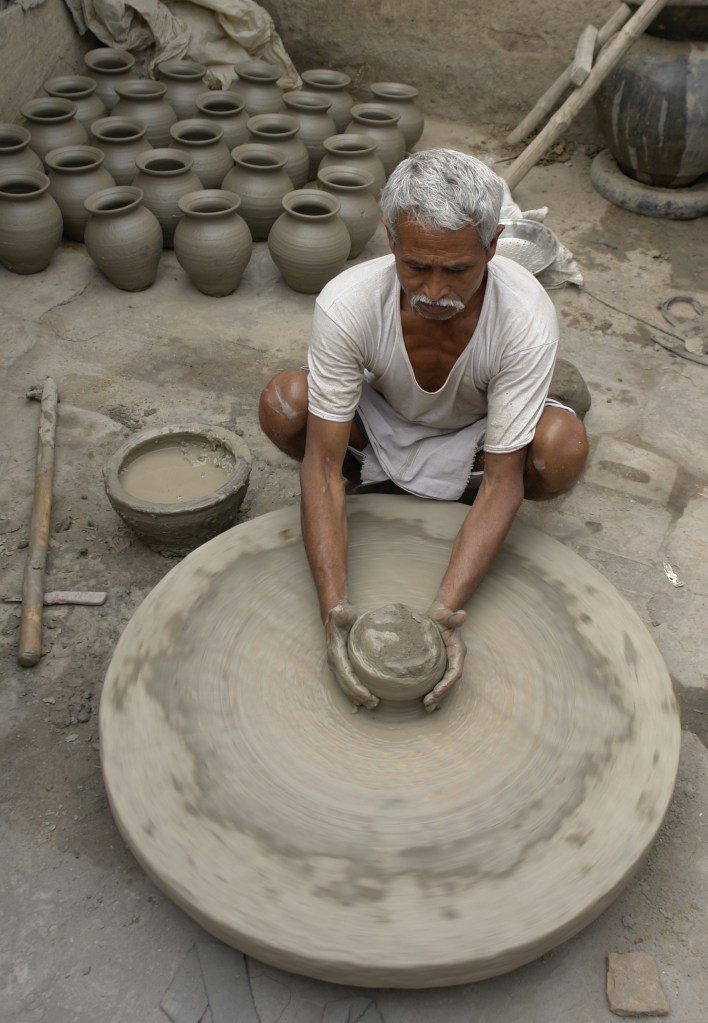
As they steadily moved, travelled miles, and settled, they gradually spread and developed unique pottery styles. But even over the centuries, in today’s modern times, ceramics art, aka pottery, is India’s most primal yet thriving craft tradition. Timeless to the core, it is an iconic element of India’s luxuriant heritage. Handcrafted by various skilled artisans, hailing from different cultural backgrounds and traditions, pottery is present across most Indian states. Primarily crafted using clay and born out of necessity, since the early times, the art of making pots, vessels, utility objects, and other myriad household things has only continued to flourish.
Read about the exceptional pottery styles practiced in contemporary times across Indian states. Although ancient, the ones that have sustained centuries to tell you the tales of their origin and crafting techniques.
Famous & Flourishing – Pottery Across Indian States
Blue Pottery – Jaipur, Rajasthan

Widely known as the traditional craft of Jaipur, blue pottery traces back its origin to Central Asian countries – Persia and Afghanistan. Formerly enchanting and decorating the Mughal courts with eye-catching designs in blue glaze, the Persian art of blue pottery gradually moved to the pink city. Since then, it has been thriving in the state, enticing tourists and pottery lovers in the form of beautifully handcrafted crockery, artefacts, decor, and other utility items. It is a glazed form of pottery that uses blue dye to colour the pottery. Made from quartz (available in abundance in Jaipur), the blue pottery exhibits intricate designs in blue and white. Jaipur blue pottery is entitled with Geographical Indication (GI) Tag.
Black Clay Pottery – Nizamabad, Uttar Pradesh

Registered with the Geographical India (GI) tag in 2015, the black clay pottery of Nizamabad is a unique type of pottery. Why? The clay of Nizamabad has high mica content and a fine texture that gives the products a good finish. Today practiced by around 250 families in the area, the black clay pottery resembles that of Northern black polished ware, making it a fascinating craft subject for many historians. Quite famous for its dark shiny black body with engraved silver patterns, black pottery is majorly exported to other parts of the world. Handcrafted by artisans as plates, bowls, vessels, pots, lamps, tea-pots, surahi, vases, incense stick holders, and statues of Hindu religious figures for the domestic and overseas markets, black clay pottery is indeed a striking piece of craft.
Kagzi Pottery – Alwar, Rajasthan to Vedic Period
The oldest form of pottery practiced in Rajasthan, Kagzi Pottery, is done using a very paper-thin layer of clay. A rare art of contemporary times, the Kagzi pottery style traces back its origin to the Indus Valley Civilisation (primitive era). Essentially an unglazed form of pottery practiced in three distinct styles, the Kagzi pottery follows unique treatment making each variety better, more sophisticated, and stylized. It requires exceptional design and finesse to fashion the Kagzi, i.e., lightweight pottery items. Though only a handful, the potters of Alwar, are still well trained in the art, practice, and produce stunning and unique paper-thin biscuit-like colour pottery captivating the hearts and minds of foreign tourists and the native ones.

Terracotta Pottery – West Bengal
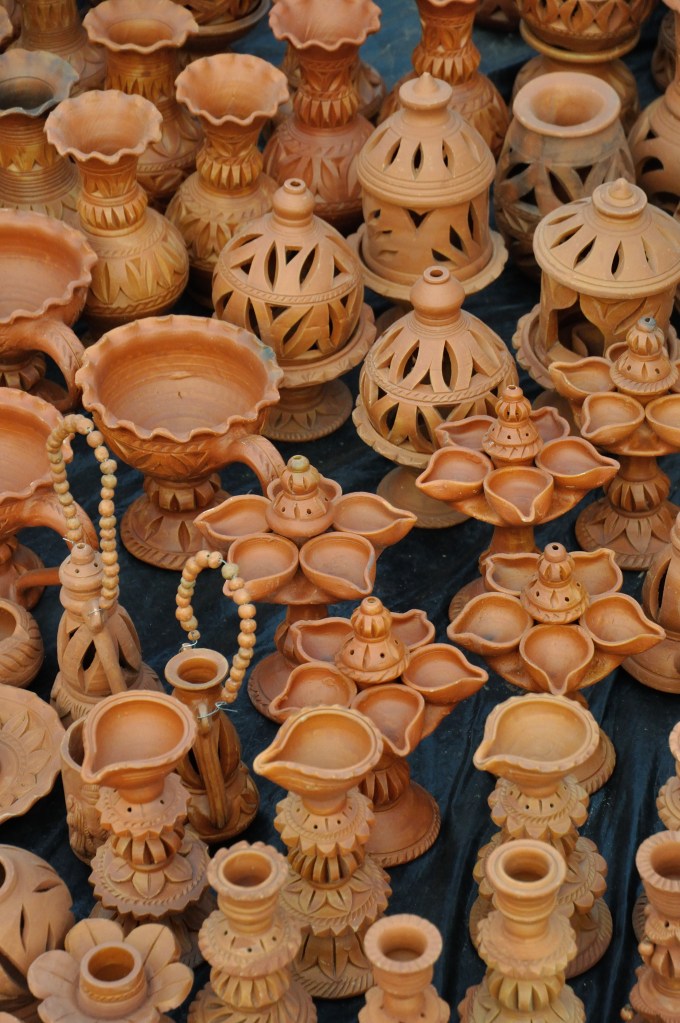
Essentially meaning ‘baked earth,’ terracotta pottery is the most common and widely practiced pottery. Dating back to 2600 to 1700 BC, its earliest usage in India can be traced back to during the Indus Valley Civilisation. Scattered across various ancient civilisations across the globe and practiced in different parts of India today, terracotta pottery, the clay craft, has undeniably withstood the centuries of evolution.
Although a key aspect of human existence, terracotta pottery’s relationship with Bengal is special. It runs deep and long as the craft is known to have been flourishing since the 16th century. It is an exclusive craft of the state that has been perfected and applied over the years and is visible in temples, as sculptures, panels, and murals, across many towns in Bengal. Highlighted with detailed artwork, crafted in folk theme, Bengal’s terracotta craft are the finest examples of the skilfulness of the artisans.
Today it is used in rural and urban landscapes as clay pots for cooking rice, mugs, yogurt pots, and whatnot. Along with Red polished wares, ‘Surai’ is also a popular make from Bengal wherein four pieces are joined together to form the base, the neck is made on the wheel and attached.
The idol makers at Kumartuli in Kolkata crafting large figurines of gods and goddesses are another example of the terracotta artisan’s skill.
Khavda Pottery – Bhuj, Gujarat
Khavda pottery tradition traces its roots to 5000 years old- Indus Valley Civilisation. The process and designing technique is identical to the excavated earthen pottery found at the Indus Valley, Harappa, and Mohenjodaro sites.
Once known as the thriving pottery of the Kutch region, Khavda pottery is practiced only by a single family in the village today. They use the clay called ‘Rann Ki Mitti’ sourced from a lake near Khavda to make earthen and decorative wares. The style sees men shaping the ‘Rann Ki Mitti,’ while the women decorate the wares with clay dots using bamboo twigs in vibrant red, black and white hues.
Potters or kumhars make earthen utensils like pots for water storage, plates, glasses, bowls, and decorative items like lamps and boxes. The potters use trademark geru (red) colour to paint the earthenware while beautifying them with black paint.

Khurja Pottery- Bulandshahar, Uttar Pradesh
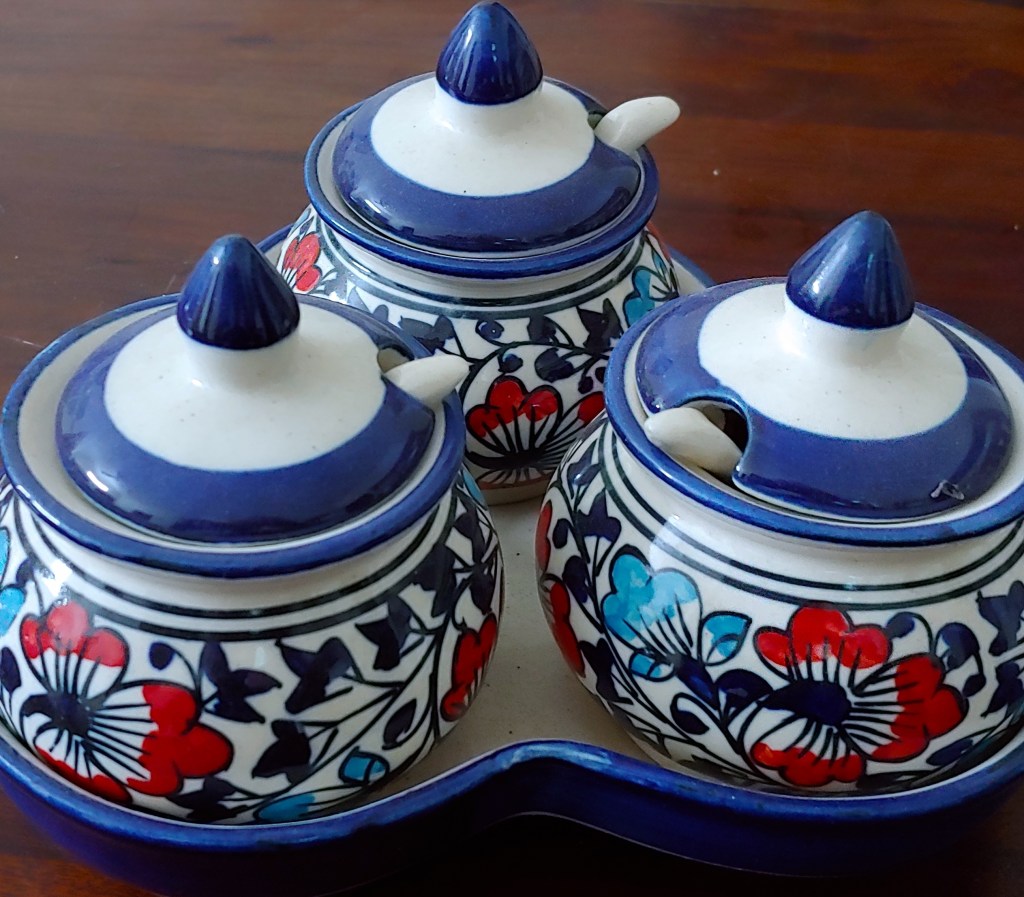
Known to have originated in Multan, the history of Khurja Pottery goes back to the times of the Mughal empire, when the potters moved to the region approx. 500 years ago. Other legends are also associated with the origin of this ancient glazed pottery.
Practiced in The Ceramics City, Khurja, this traditional Indian pottery work has been secured under the Geographical Indication (GI) tag. Today, the city is famous for providing ceramics to a large extent in India and catering to international markets’ demands.
Kumhars use – clay, plaster of Paris, oxidised chemical colours, glaze solution, Kiln, Jigger, and Jolly machine in making Khurja Pottery.
The skilled potters use clay mixed with a liquid solution and pour it into a mould until the cavity is filled. The mould box is then smoothly shaken/rotated/tilted to keep the required clay. Floral and geometric designs, Mughal art, and conventional themes are painted on the exterior. Later a glossy coating (glazing) is done to paint, embellish, waterproof, and strengthen the ceramic work. They wheel out decorative and earthen items such as crockery wares, art wares, sanitary wares, tiles, electrical products, and household items.
Longpi Pottery- Manipur, Nagaland
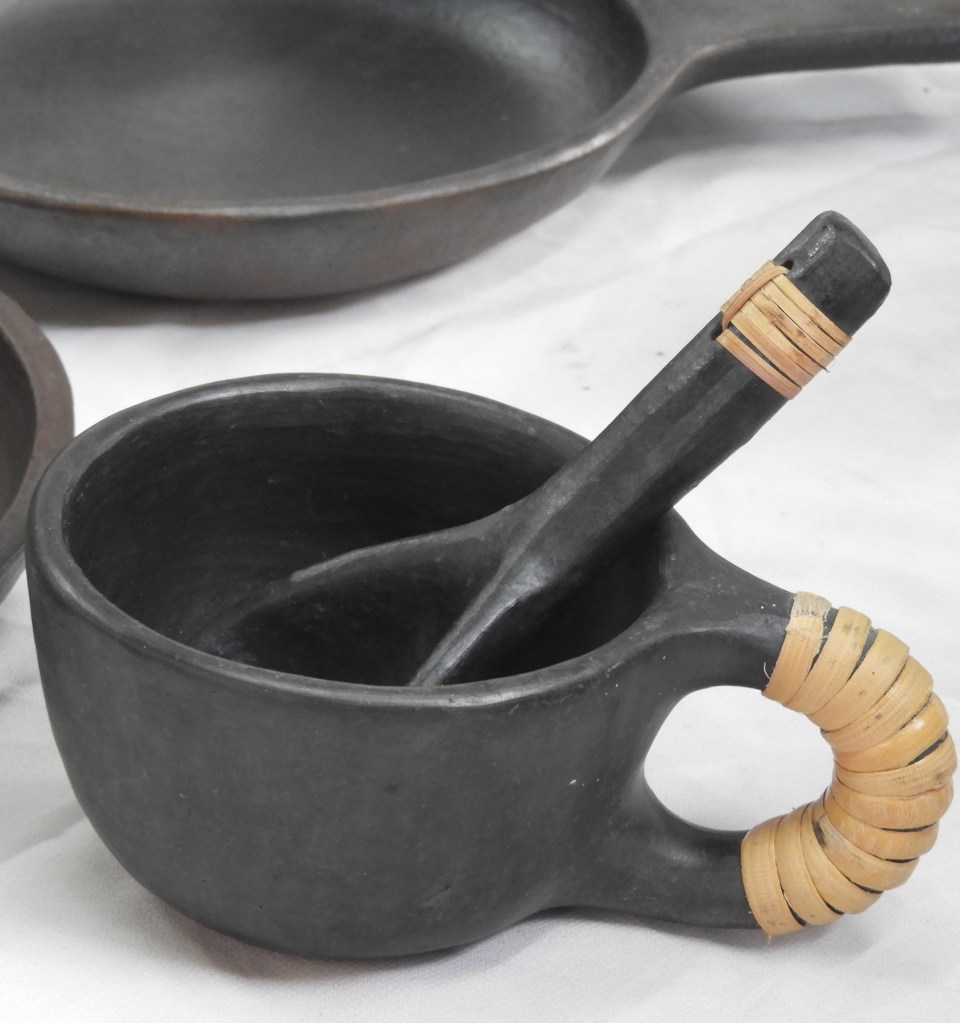
The Longpi Pottery, also known as Stone/Black Pottery, is the ancient traditional craft from Manipur. The art’s original name is derived from Longpi villages, namely Longpi Khullen and Longpi Kajui. Pottery is practiced by the creative craftsmen belonging to Tangkhul Naga tribe. It is a unique and exquisite artwork as it is handcrafted, manually shaped, polished, and sun-dried. Also known as royal pottery, the one known to be purchased by only the rich and the royal clan of Manipur has gained importance in international markets.
The Longpi potters use a mixture of ground black serpentine stone and special brown clay (exclusively found only in Longpi village) to make the stunning black-hued pottery. This mixed paste is rolled out as coils, moulded into a cylinder, and heated in a bonfire, thus taking six days to complete Longpi Pottery. They use technology and carve intricate designs on the exterior of the pots.
Summing up the Hues of Pottery
Over thousands of years, pottery has traversed an incredible journey. In the history of humanity, it practically (artistically) paved the way for his seamless evolution. Referred to as ‘Lyric of Handicrafts,’ pottery has been an integral craft around which several civilisations and vast empires have existed and thrived. Signifying man’s first attempt at craftsmanship, the charm and appeal of pottery are universal and will continue to be. It has only diversified and flourished from being as simple and grand as Terracotta to being as exclusive as Blue Pottery and widely yet uniquely practiced Black Pottery. Although a centuries-old tradition, it is still and will be an integral part of our lives as it has been for several millenniums.
 thepeepaltree.in